10 Ways to Survive Until Payday in South Africa (2026 Guide)
Advertiser Disclosure: MoneyHello is an independent, advertising-supported comparison service. We may earn a referral fee if you click our links or use our matching tool to connect with a lender. This does not affect the content of our articles or the loan offers you receive.
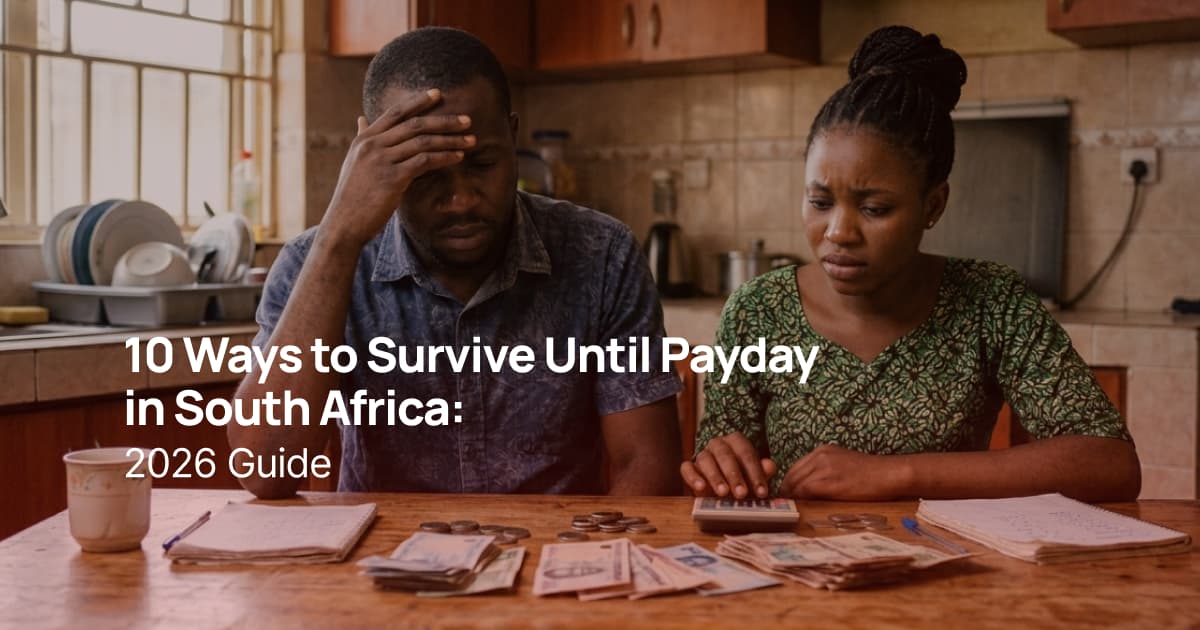
We all know this feeling when there are more days left than money before payday.
You start calculating everything in your head, dividing what’s left by the number of days, and suddenly even basic things like groceries feel out of reach. It can feel like you’ll have to survive on the bare minimum just to make it through.
And the pressure adds up quickly.
How do you stretch your last R1,000 when you still need to fill up your car, buy groceries for your household, and cover unexpected expenses like medication?
At the same time, everyday costs in South Africa continue to rise. According to recent estimates, a single person in South Africa can spend around R2,000-R2,500 per month on groceries alone.
That’s why running out of money before payday is not just a budgeting issue, it’s a reality many South Africans face.
The good news?
If you’re searching for how to survive until payday in South Africa, you’re not alone. There are practical ways to stretch your money, reduce pressure, and get through the last days before payday without falling into debt.
In this blog post, we’ll walk through 10 realistic ways to survive until payday in South Africa, so you can stay in control of your finances even when money is tight.
To survive until payday in South Africa, focus on prioritizing essentials, cutting non-essential spending, using what you already have, and finding small ways to stretch your cash without relying on high-interest debt.
Why So Many South Africans Struggle Before Payday
If you regularly run out of money before payday, it’s not just bad luck, and it’s not just poor budgeting.
The reality is that many South Africans are dealing with structural financial pressure, where expenses grow faster than income.
Here’s what’s really behind it.
Rising Cost of Living
The cost of living in South Africa has increased steadily over the past few years. For example, water prices rose by approximately 68% since 2020, adding additional pressure on household budgets. Basic expenses like groceries, electricity, medical costs are taking up a larger portion of monthly income.
This means there’s less room for savings and less financial buffer when something unexpected happens.
Petrol and Food Price Increases
Fuel prices don’t just affect how much you pay at the pump – they impact almost everything you buy.
This is because transport costs are included in the final price of goods and services. The latest fuel price increases have already affected the monthly budgets of many households across South Africa.
When petrol prices rise:
- transport becomes more expensive
- food prices increase due to delivery costs
- everyday goods become more expensive
This creates a ripple effect across your entire budget. Over time, these increases compound meaning even small monthly cost increases can significantly reduce your disposable income.
Debt and Fixed Expenses
Many households already have fixed monthly obligations, such as:
- rent
- loan repayments
- subscriptions
- insurance
These costs don’t change even when your income stays the same or expenses increase. As a result, by the time you reach mid-month, most of your money is already allocated.
Lack of Emergency Savings
Without a financial buffer, even small unexpected expenses can cause problems.
For example:
- medical costs
- car repairs
- school expenses
When these happen, they reduce the money available for essentials making it harder to reach payday.
10 Ways to Survive Until Payday in South Africa
According to DebtBusters’ latest Money Stress Tracker, around 70% of South Africans reported experiencing financial stress in the past year. This means that a lot of people felt trapped at least once before payday.
When money is tight, the goal isn’t to be perfect, it’s to stay in control and make smart decisions with what you have left.
Here are 10 practical ways to stretch your money until payday.
1. Prioritize Essentials Only
Start by focusing on what truly matters:
- Food
- Transport
- Basic necessities
Everything else can wait.
Ask yourself: Do I need this right now, or can it wait until payday?
2. Use What You Already Have
Before going to the store or ordering delivery, check your kitchen.
You’ll be surprised how many meals you can make with:
- pantry items
- frozen food
- leftovers
The goal is to delay spending, not eliminate food.
3. Cut Down on Transport Costs
Fuel can quickly drain your remaining money.
Try to:
- Combine trips
- Avoid unnecessary driving
- Use public transport if possible
Even small reductions can save you R100-R300 before payday.
4. Track Every Rand You Spend
When money is low, awareness becomes your biggest advantage.
Write down:
- Every purchase
- Every expense
You can use budgeting applications to manage your budget with ease. This helps you avoid “invisible spending” that adds up fast.
5. Cut Takeaways and Deliveries
Takeaways are one of the fastest ways to burn through cash.
Even a few orders can cost R150-R300 per meal. Recent data suggests that many South Africans spend around R775 per month on takeaways and food delivery.
Cooking at home, even simple meals, saves a lot more than you think. For the same amount of money you can prepare two or three times more food.
6. Reduce Electricity Usage
Electricity is another hidden cost.
To save:
- Switch off unused appliances
- Limit geyser usage
- Use energy-efficient habits
Small changes can reduce your bill, especially over a few days.
7. Delay Non-Urgent Payments
If something isn’t urgent, it can wait.
This could include:
- Subscriptions
- Non-essential purchases
- Optional services
The key is to protect your cash flow until payday.
8. Find Quick Ways to Make Extra Cash
If possible, bring in a small amount of extra income.
Options include:
- Selling unused items
- Freelance or small gigs
- Helping friends or neighbors
Even an extra R200-R500 can make a big difference.
9. Ask for Help (Strategically)
If you’re really struggling, don’t hesitate to ask for support.
Options:
- Family or friends
- Salary advance from employer
It’s often safer than turning to high-interest debt.
10. Avoid High-Interest Debt Traps
When money is tight, quick loans can seem like an easy solution.
But be careful:
- Payday loans often come with high interest
- They can create long-term financial pressure
If you do need a loan, make sure to compare personal loans in South Africa and choose a trusted, regulated lender.
Surviving until payday isn’t about extreme sacrifice, it’s about making smarter, short-term decisions. Small adjustments can help you stretch your money further than you expect.
What NOT to Do Before Payday
When money is tight, it’s easy to make quick decisions that feel helpful in the moment but create bigger problems later.
Avoiding these common mistakes can help you protect your finances and avoid unnecessary stress.
Don’t Rely on Credit for Everyday Expenses
Using credit cards or quick loans to cover daily costs like fuel or groceries might seem like a solution.
But in reality:
- You’re borrowing for ongoing expenses
- Interest adds extra pressure
- The problem repeats next month
This can quickly turn into a cycle of debt. But if you have already considered all the possible options and only borrowing is a solution, then check what is better for you personal loan or credit card.
Don’t Ignore Your Spending
When money is low, some people avoid checking their balance altogether.
This leads to:
- Overspending without realizing it
- Running out of money faster
- More stress later
Even if it’s uncomfortable, knowing exactly where you stand gives you control.
Don’t Take the First Loan You See
Desperation can make fast loans look attractive.
But be careful:
- Many “instant approval” loans have very high interest
- Some lenders are not properly regulated
- Hidden fees can increase your total repayment
Always compare options and choose NCR-registered lenders only. According to the law, all the official lenders in South Africa must be registered with the National Credit Regulator (NCR).
Don’t Continue Normal Spending Habits
This is one of the most common mistakes.
If your budget is tight but your lifestyle doesn’t change:
- Takeaways
- Subscriptions
- Impulse purchases
You’ll run out of money even faster.
Don’t Assume “It Will Work Out”
Hoping things will somehow balance out rarely works.
Instead:
- Be proactive
- Adjust your spending early
- Plan for the remaining days
Small actions now prevent bigger problems later.
Surviving until payday isn’t just about what you do, it’s also about what you avoid.
The wrong financial decisions during this time can have lasting effects beyond just one month.
When a Short-Term Loan Might Be Necessary
In an ideal situation, you would avoid borrowing altogether.
But in reality, there are moments when a short-term loan can help you manage financial pressure, especially when the situation is urgent and unavoidable. The latest report from TransUnion shows that more South Africans started to take personal loans to cover their short-term or emergency expenses.
The key is understanding when it makes sense, and when it doesn’t.
Situations Where a Loan Can Help
A short-term loan may be reasonable if it helps you deal with a one-time, necessary expense, such as:
- Emergency medical costs
- Urgent car repairs (especially if you rely on your car for work)
- Essential household expenses you cannot delay
In these cases, a loan can act as a temporary solution, not a long-term habit.
When You Should Be Careful
Using a loan to cover regular monthly expenses can create more problems than it solves.
For example:
- Fuel
- Groceries
- Daily transport
These are ongoing costs, which means:
- The problem will return next month
- You’ll still need money plus repayments
This can quickly lead to a cycle of borrowing.
Think About the Real Cost
Before taking any loan, take a moment to evaluate:
- What is the total amount you will repay (not just monthly instalments)?
- Can you realistically afford the repayments next month?
- Will this improve your situation or just delay the pressure?
Even small loans can become expensive if interest rates are high.
Consider Alternatives First
Before applying for a loan, it’s worth exploring other options:
- Adjust your spending
- Delay non-essential payments
- Ask for a salary advance
- Seek temporary support from family
These options may help you avoid interest and additional financial pressure.
If You Decide to Borrow
If a loan is necessary, take a careful and informed approach:
- Compare multiple lenders
- Choose NCR-registered providers only
- Avoid offers that promise “instant approval” without checks
- Read all terms and conditions
You can explore options to find safer and more affordable choices.
Key Takeaway
A short-term loan can be helpful in the right situation but it should always be a last resort, not a default solution.
Borrowing should solve a problem, not create a bigger one.
How to Avoid Running Out of Money Next Month
Surviving until payday is important but the real goal is to break the cycle so it doesn’t keep happening every month.
Small, consistent changes can make a big difference over time.
Build a Mini Emergency Fund
You don’t need a large savings account to start.
Even putting aside:
- R50-R100 per week
- or a small amount each payday
can create a buffer for:
- unexpected expenses
- fuel increases
- last-minute costs
The goal is not perfection, it’s progress and consistency.
Budget for Variable Costs
Many people budget for fixed expenses but forget about costs that change every month.
These include:
- fuel
- groceries
- electricity
Instead of guessing, plan for:
- slightly higher petrol prices
- rising food costs
This helps you avoid surprises and stay in control.
Track Your Spending Weekly
Most budgets fail not because they’re wrong but because they’re not updated.
Instead of checking your finances once a month, review your spending every week.
This helps you:
- Spot problems early
- Adjust before money runs out
- Stay aware of where your money is going
Small weekly check-ins can prevent end-of-month stress.
Frequently Asked Questions
What to do if I have no money before payday?
Start by prioritizing essentials like food and transport.
Then:
- Use what you already have at home
- Cut all non-essential spending
- Ask for temporary support if needed
Avoid high-interest loans unless absolutely necessary.
Are payday loans safe in South Africa?
Some payday lenders are legal and regulated, but many charge very high interest rates.
This makes them risky for everyday expenses.
If you consider borrowing:
- Choose NCR-registered lenders
- Compare options carefully
- Understand the full cost before applying
How can I stretch R500 for a week?
Focus on essentials only.
For example:
- Buy basic groceries (rice, pasta, vegetables, eggs)
- Avoid takeaways
- Limit transport where possible
Planning meals ahead can make a big difference.
Can I get an advance on my salary?
In some cases, yes.
Some employers offer:
- salary advances
- flexible pay options
This can be a safer alternative to high-interest loans.
Conclusion: Take Back Control Before Payday
Running out of money before payday can feel stressful, but it doesn’t mean you’ve failed.
It often reflects rising costs, not just spending habits.
The key is to:
- Stay aware of your finances
- Make small, smart adjustments
- Plan ahead where possible
Over time, these habits can help you move from surviving → managing → improving your financial situation.
Struggling before payday? Compare smarter financial options and take control of your money with MoneyHello.