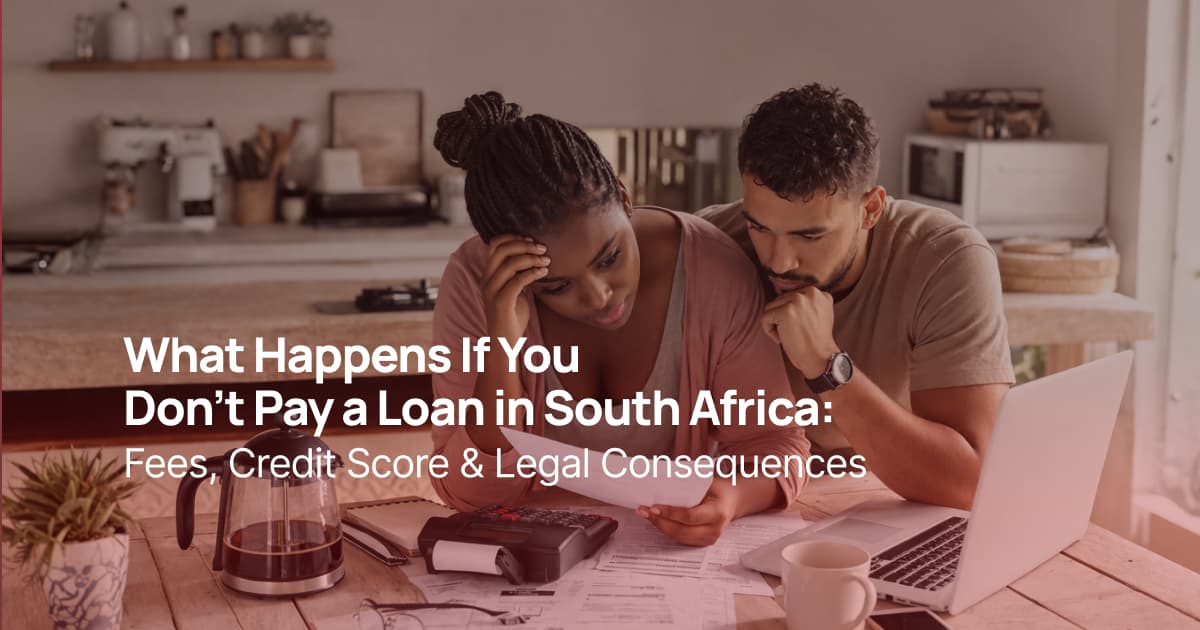
What Happens If You Don’t Pay a Loan in South Africa: Fees, Credit Score & Legal Consequences
Advertiser Disclosure: MoneyHello is an independent, advertising-supported comparison service. We may earn a referral fee if you click our links or use our matching tool to connect with a lender. This does not affect the content of our articles or the loan offers you receive.
When you take a loan, everything usually feels under control. You have a stable income, clear plans, and confidence that you’ll be able to repay it without problems.
But life doesn’t always go according to plan.
Unexpected events like job loss, rising living costs, or sudden health issues can quickly change your financial situation. What once felt manageable can become stressful, especially when monthly repayments start to feel overwhelming.
Most people don’t think about what happens if they don’t pay a loan until they are in that situation. And when it happens, the first reaction is often the same: searching for clear answers. According to recent credit industry reports, around a third of South African borrowers have impaired credit, meaning they are three or more months behind on at least one debt.
So what actually happens if you stop paying a loan?
In this guide, we’ll explain what happens if you don’t pay a loan in South Africa, including penalties, credit score impact, and possible legal consequences.
What Happens Immediately After You Miss a Loan Payment
Missing a loan payment doesn’t usually lead to immediate legal action, but it does trigger a series of steps from the lender. At first, the consequences may seem small, but they can escalate quickly if the situation is not addressed.
1. Late Payment Fees May Apply
As soon as you miss a payment, the lender may charge a late payment fee or penalty interest.
These additional costs can increase the total amount you owe, especially if payments continue to be missed.
2. You Will Receive Reminders from the Lender
In the early stage, most lenders will try to contact you.
This may include:
- SMS reminders
- phone calls
- emails
The goal is usually to resolve the issue quickly, not to punish you.
3. Your Account May Be Reported as “In Arrears”
If the payment is not made within a certain period, your account may be marked as in arrears.
This means:
- you are officially behind on your payments
- your credit profile may start to be affected
4. Interest Continues to Accumulate
Even if you miss a payment, interest does not stop.
This means:
- your total debt continues to grow
- catching up becomes more difficult over time
Missing one payment does not automatically mean serious consequences. However, repeated missed loan payments in South Africa can quickly lead to higher costs, credit score damage, and legal action. If your financial situation is unstable, it’s better to first understand how much personal loan you can afford in South Africa.
How Missing a Loan Payment Affects Your Credit Score in South Africa
One of the most serious consequences of missing a loan payment is the impact on your credit score. In South Africa, lenders report your payment behaviour to credit bureaus. This means that missed or late payments can become part of your credit history.
How Quickly Does Your Credit Score Get Affected?
If you miss a payment, it may not affect your credit score immediately. However:
- after a short delay, missed payments can be recorded
- if you are 30 days or more late, it is more likely to be reported
- repeated missed payments have a stronger negative impact
What Happens to Your Credit Profile?
Once a missed payment is recorded:
- your credit score may decrease
- future lenders may see you as a higher risk
- your chances of approval may be lower
Even if you are approved for a loan later, you may receive:
- higher interest rates
- smaller loan amounts
- stricter repayment terms
What Is “Impaired Credit”?
In South Africa, your credit is often considered impaired if you are three or more months behind on payments.
At this stage:
- your credit profile is significantly affected
- accessing new credit becomes much more difficult
How Long Does It Stay on Your Record?
Missed payments and negative listings can remain on your credit record for several years, depending on the type of listing. This means the impact is not just short-term, it can affect your financial options well into the future.
Legal Consequences of Not Paying a Loan in South Africa
If missed payments continue over time, the situation can escalate beyond fees and credit score damage. In South Africa, lenders must follow a legal process before taking further action, but this process can still have serious consequences.
1. Default Notice (Section 129 Letter)
Before taking legal action, the lender is required to send a Section 129 notice under the National Credit Act.
This notice will:
- inform you that your account is in default
- give you an opportunity to catch up on payments
- suggest options such as debt counselling
This is an important stage, it’s your chance to resolve the issue before legal action begins.
2. Hand Over to Debt Collectors
If the debt is not resolved, the lender may hand your account over to a debt collection agency.
At this stage:
- you may receive more frequent calls and messages
- additional collection fees may apply
- the pressure to repay increases
However, debt collectors must still follow legal rules, they are not allowed to harass or intimidate you.
3. Legal Action and Court Process
If the debt remains unpaid, the lender may take legal action.
This can lead to:
- a court judgment against you
- additional legal costs
- a formal record of the debt
A judgment can significantly affect your financial standing and ability to access credit in the future.
4. Garnishee Order (Salary Deduction)
In some cases, the court may approve a garnishee order, which allows repayments to be deducted directly from your salary.
This means:
- a portion of your income is automatically used to repay the debt
- your take-home salary is reduced
What to Do If You Can’t Pay Your Loan in South Africa
If you’re struggling to keep up with your loan repayments, the most important thing is not to panic and not to ignore the situation.
There are several steps you can take to reduce the impact and regain control of your finances.
1. Contact Your Lender as Soon as Possible
Many people avoid answering calls or messages from lenders, but this can make things worse.
Instead:
- reach out early
- explain your situation
- ask about possible options
Some lenders may offer:
- payment arrangements
- temporary relief
- adjusted repayment plans
2. Review Your Budget and Prioritise Essentials
Take a closer look at your monthly income and expenses.
Focus on:
- essential costs (rent, food, transport)
- reducing non-essential spending
- freeing up money for repayments
Even small adjustments can help you stay on track.
3. Consider Debt Counselling
If you are struggling with multiple debts, debt counselling may be an option.
In South Africa, this is a legal process under the National Credit Act that can:
- help restructure your debts
- reduce monthly repayments
- protect you from legal action while under review
4. Avoid Taking New Loans to Cover Old Debt
It may be tempting to take another loan to cover missed payments, but this can lead to a debt cycle.
Instead of solving the problem, it often:
- increases your total debt
- adds more interest and fees
- creates long-term financial pressure
If you do need to restructure your debt responsibly, it’s important to compare lenders carefully. Reviewing the best personal loans in South Africa for 2026 can help you find lower rates and better repayment terms.
5. Be Careful of Unregulated Lenders
When you’re under financial pressure, offers that promise:
- “guaranteed approval”
- “no checks”
- “instant cash”
can be tempting.
But these are often mashonisa lenders or unregulated providers.
Always make sure the lender is NCR-registered before accepting any offer.
Financial difficulties can happen to anyone. What matters most is how you respond.
Taking action early can help you reduce penalties, protect your credit score, and avoid legal consequences.
If you’re unsure which option is right for you, comparing personal loans in South Africa can help you find safer and more suitable solutions instead of rushing into risky decisions.
Compare personal loans in South Africa with MoneyHello and see which lenders match your income and financial situation.